Necessary cookies help make a website usable by enabling basic functions like page navigation and access to secure areas of the website. The website cannot function properly without these cookies.
| Name |
Domain |
Purpose |
Expiry |
Type |
|
wpl_user_preference |
www.astc.org |
WP GDPR Cookie Consent Preferences |
1 year |
HTTP |
|
YSC |
youtube.com |
YouTube session cookie. |
Session |
HTTP |
Marketing cookies are used to track visitors across websites. The intention is to display ads that are relevant and engaging for the individual user and thereby more valuable for publishers and third party advertisers.
| Name |
Domain |
Purpose |
Expiry |
Type |
|
VISITOR_INFO1_LIVE |
youtube.com |
YouTube cookie. |
Session |
HTTP |
|
GPS |
youtube.com |
Google advertising domain |
Session |
HTTP |
Analytics cookies help website owners to understand how visitors interact with websites by collecting and reporting information anonymously.
| Name |
Domain |
Purpose |
Expiry |
Type |
|
_ga |
astc.org |
Google Universal Analytics long-time unique user tracking identifier. |
2 years |
HTTP |
|
_gid |
astc.org |
Google Universal Analytics short-time unique user tracking identifier. |
1 day |
HTTP |
|
IDE |
doubleclick.net |
Google advertising cookie used for user tracking and ad targeting purposes. |
1 day |
HTTP |
Preference cookies enable a website to remember information that changes the way the website behaves or looks, like your preferred language or the region that you are in.
We do not use cookies of this type.
Unclassified cookies are cookies that we are in the process of classifying, together with the providers of individual cookies.
| Name |
Domain |
Purpose |
Expiry |
Type |
|
_gat_gtag_UA_383883_1 |
astc.org |
--- |
Session |
--- |

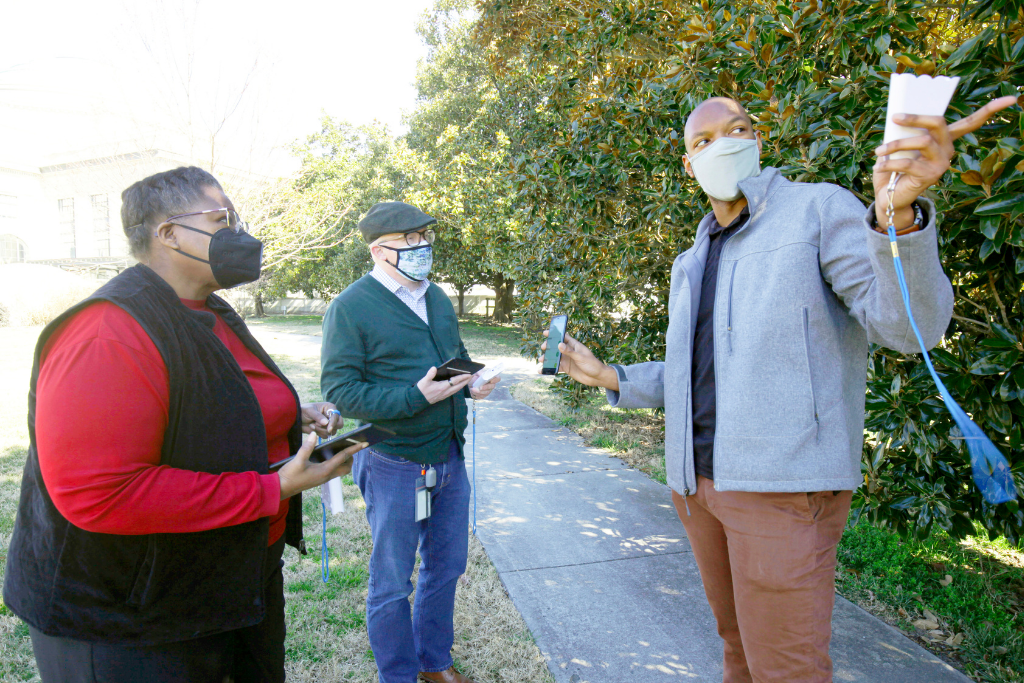
 As communities work together to face global and local challenges, and as the role of science and technology in our society continues to evolve, it is more important than ever for all people to have the opportunity to engage with, participate in, contribute to, and benefit from science, technology, and innovation. Community science approaches often involve powerful partnerships that generate new questions, ideas, and solutions to make meaningful progress on community priorities, with a focus on equity and sustainability. Community science brings together disparate—and often marginalized—groups to co-construct sustainable solutions to improve community well-being and to create mutually beneficial relationships.